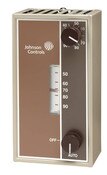
What Is a Line Voltage Thermostat?
A line voltage thermostat switches the full circuit voltage directly, at whatever voltage the circuit runs, rather than sending a low-voltage signal to a separate relay or contactor that does the switching. It's the standard control for baseboard convectors, cabinet unit heaters, and other electric heat loads wired directly into the circuit. A low-voltage thermostat built for a central HVAC system isn't rated to carry that current.
Pole Configuration and Switch Type
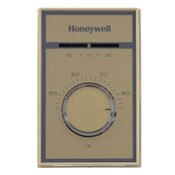
Line voltage thermostats in this category are available in single-pole (SPST) and double-pole (SPDT) switch configurations, and in heating-only, cooling-only, or combined heat and cool versions. Match the switch type and pole count to the existing wiring and load, since a single-pole thermostat isn't a direct swap for a double-pole circuit.
Mounting Style
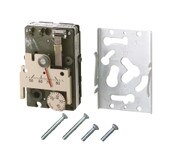
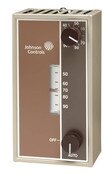
Most line voltage thermostats mount to a standard wall box. However, some applications, like a heating-cooling changeover control on a pipe or duct, call for a strap-on thermostat instead. Confirm which mounting style the application needs before ordering, since a wall-mount unit won't work in a strap-on application, and the reverse is also true.
Temperature Range and Differential
Confirm the thermostat's temperature range and switching differential against the manufacturer's data sheet before ordering, since these vary by model and matter more in applications with tight comfort or process tolerances. A wider differential means the thermostat cycles less often but allows more temperature swing between cycles.
Why Choose Energy Control Technologies
Energy Control gives HVAC contractors and facilities managers a single source for line voltage thermostats, backed by verified specs and a straightforward path to purchase.
- Two manufacturers, one catalog: We carry Honeywell and Johnson Controls, covering wall-mount and strap-on thermostats for baseboard heat, unit heaters, and heating-cooling changeover applications.
- Specs sourced from the manufacturer, not summarized: Product listings in this category link to the manufacturer's own data sheet, and the specs on this page are pulled directly from those sheets.
- Two ways to buy: Order online for in-stock parts, or request a quote for project pricing, useful for a contractor bidding a job before parts are released for purchase.
Need Help Choosing a Line Voltage Thermostat?
For a project quote, bulk order, or help matching a thermostat's switch type, mounting style, or temperature range to your application, submit a quote request or contact Energy Control's sales team.
Contact UsLine Voltage Thermostat FAQs
What's the difference between a line voltage thermostat and a low voltage thermostat?
A line voltage thermostat switches the full circuit voltage directly, so it's wired straight into the heating circuit it controls. A low voltage thermostat, the type used with most central HVAC systems, sends a low-voltage signal to a separate relay, contactor, or control board that does the switching. Line voltage thermostats are the standard control for baseboard heat and unit heaters because the circuit has no separate switching device to fail or replace.
What are the disadvantages of a line voltage thermostat?
A line voltage thermostat is wired directly into the circuit it controls, so working on it means working on a live line-voltage circuit rather than a low-voltage control wire, which raises the stakes of a wiring mistake and generally calls for a licensed electrician. Most line voltage thermostats are also mechanical, dial-style devices rather than digital, so they typically don't offer the scheduling or remote-control features a low-voltage programmable or smart thermostat does.
Can a line voltage thermostat be used for both heating and cooling?
It depends on the model. Some line voltage thermostats are built for heating only or cooling only, while others offer a combined heat-and-cool switching function in one unit. Check the specific product listing for its switching function before ordering, since using the wrong type won't control both sides of the application.